Electric vehicles (EVs) can reduce fleet emissions, but successful electrification depends on well-planned, well-managed charging.
For fleets, depot charging keeps vehicles ready for every shift, supports cost control and reduces reliance on higher-cost public charging.
Demand spans the economy. Analysis obtained by Drax Electric Vehicles through a Freedom of Information request found 284 applications to the Depot Charging Scheme pilot, seeking up to £1m in infrastructure funding. Private sector organisations accounted for 72% and local authorities 21%, highlighting demand across commercial and public fleets.
A new £170m multi-year programme launched in March 2026 and runs to 2030. The latest application window, ending 29 February 2027, covers 60% of charge point and civil costs, up to £1m per organisation.
With funding available but upfront investment still significant, five considerations can help fleets get the foundations right.
1. Start with data
Understand vehicle operations before specifying chargepoints: assumptions risk overspending or under delivery.
Telematics reveals journey patterns, daily mileage, dwell times and downtime. Where unavailable, operational profiles using driver data, job functions, route types and load requirements provide a foundation.
An EV suitability assessment combines these sources to identify vehicles ready for electrification, charging needs and realistic carbon and cost savings. Vehicles may spend longer stationary at depot than expected, changing charging-speed and infrastructure requirements.
Operational evidence also strengthens funding applications: the Depot Charging Scheme requires applicants to quantify how EV charging needs affect their depot.
2. Understand your site's energy capability
A professional site assessment should establish available capacity, identify electrical infrastructure constraints and model demand as the fleet grows. Where capacity is limited, assess whether smart charge management will suffice or a connection upgrade is unavoidable. UK upgrade timelines can reach 18 months or more in some areas.
Identifying constraints early allows fleets to plan around them rather than discover them mid-project.
3. Map your operational requirements
Electrification is an operational project, not simply a technology installation. Charging must accommodate shifts, turnaround times, maintenance schedules and vehicle types.
Predictable overnight parking requires a different approach from round-the-clock operations with unpredictable returns. Moving from vans to electric vans also requires planning for different power demands and space requirements.
Align charging with lower-cost periods, including overnight off-peak tariffs, where vehicle movements allow. Savings depend on schedules reflecting operational reality.
4. Design the right infrastructure
Use fleet data, site assessments and operational mapping to specify infrastructure. The fastest chargers cost more in hardware, installation and grid demand; choose them only when operations justify the expense.
For most depots, slower charging during loading, maintenance or overnight parking delivers equivalent vehicle availability at lower cost. Reserve higher-powered units for short turnarounds and limited dwell times.
Layout and cable management matter equally. Cables crossing vehicle routes or walkways create hazards and wear. Overhead supports, recessed ground channels and dedicated charging bays help protect people and equipment. Design must reflect employers’ Health and Safety at Work Act responsibilities.
5. Build in smart energy management and room to grow
Make depot charging part of a wider energy strategy. Smart management allocates energy by vehicle priority and availability, avoiding demand spikes and associated penalties while reducing peak-rate electricity use.
It can often avoid grid upgrades, saving time and money, particularly in constrained network areas.
Plan expansion during the initial build. Groundworks are costly and disruptive; additional ducting or cabling capacity makes later chargepoint additions faster and cheaper. Battery storage and on-site renewables are increasingly viable options for stabilising costs and improving resilience.
Looking ahead
Alongside the Depot Charging Scheme, the Workplace Charging Scheme’s up to £500-per-socket grant makes the funding landscape more supportive than ever.
But funding alone cannot guarantee success: data-led planning, understanding site constraints and aligning infrastructure with operations remain essential to controlling total costs, protecting vehicle availability and scaling confidently.
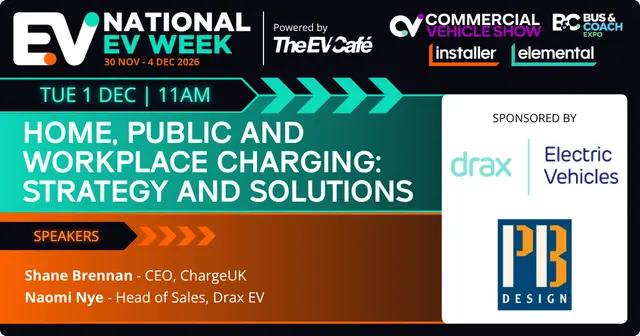
Drax Electric Vehicles is one of the sponsors of National EV Week 2026, which runs from 30th November with a packed programme of webinars and digital content.
On 1st December, Naomi Nye from Drax EV will be speaking on the session Home, Public and Workplace Charging: Strategy and Solutions. Free registration is here.